When supporting dogs with digestive enzyme supplements, more is not always better. In fact, one of the most common patterns seen among dog owners is the need to use excessively high amounts of weaker enzyme products just to achieve consistent results.
This often leads to what can effectively become overdosing, not because pet owners are careless, but because the product itself lacks sufficient potency per serving. Understanding the proper digestive enzyme dosage is critical, but even the best guidelines can fall short when the product being used does not deliver enough enzymatic activity per dose.
Why Overdosing Happens with Lower-Potency Enzymes
Many digestive enzyme supplements on the market are labeled as 6x or 8x strength. While that may sound effective, these products often contain significantly lower enzyme activity per serving, especially when it comes to lipase which is arguably the most important enzyme in canine digestion.
This is why so many dog owners find themselves increasing their dosage over time. When enzyme potency is too low, the only way to compensate is by adding more powder to each meal. Understanding the difference between 6x, 8x, and 10x pancreatic enzymes for dogs makes it clear why lower-strength products often lead to higher usage per feeding.
Over time, this becomes routine, with meals requiring larger and larger quantities of enzyme powder just to maintain consistency.
- More dosing per meal becomes necessary to achieve consistent results
- Feeding routines become less precise, often involving trial and error
- Costs increase significantly due to higher daily usage
- Dogs are exposed to excess enzyme volume at each feeding
The Hidden Downsides of Overdosing Digestive Enzymes in Dogs
Digestive enzymes are essential, but using more than necessary does not improve outcomes. Instead, it often introduces inefficiencies and avoidable complications. In many cases, what appears to be a dosing issue is actually related to how enzymes are being prepared and used during feeding.
Following the correct way to mix digestive enzyme powder into your dog’s food can help improve consistency and reduce the need for excessive amounts.
- Increased waste, since more product is required per meal
- Higher long-term cost for daily feeding
- Inconsistent feeding results, especially when doses are frequently adjusted
- Unnecessary digestive load and acid reflux from using excess enzymes
Tracking your dog’s response can also help identify patterns. Tools like the Dog Enzyme Digestive Health Stool Tracker for monitoring digestion and stool consistency can make it easier to fine-tune your approach.
Why Digestive Enzyme Strength and Lipase Potency Matter
The key factor in digestive enzyme effectiveness is not how much you use, but how much active enzyme is delivered per serving. This is where potency becomes critical.
To fully understand this, it helps to review how digestive enzymes work in dogs to break down fats, proteins, and carbohydrates.
Lipase, in particular, plays a central role in fat & protein digestion, and insufficient levels often lead to poor stools and increased dosing.
Many 8x enzyme products typically vary from 80,000 to 126,000 USP units/mg of lipase. While functional, this spread of potency is inconsistent batch-to-batch and often requires higher amounts per meal to achieve the same digestive support.
How Pan-tenex 10x Digestive Enzymes Reduce the Need for Overdosing
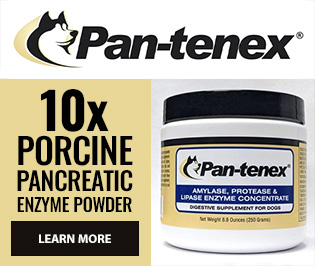
Pan-tenex high potency digestive enzymes for dogs are formulated at 10x strength, making them one of the most concentrated enzyme options available. At the time of filling, Pan-tenex consistently has lipase levels that exceed 170,000 USP units/mg in every batch, allowing dog owners to use much less per meal compared to any 6x or 8x product.
This higher concentration allows for more efficient enzyme dosing, reducing the need to compensate with excessive amounts of powder at each feeding. For dog owners currently using lower-strength products, switching from weaker digestive enzyme supplements to Pan-tenex often results in using significantly less product per meal.
- Much lower amount needed per feeding
- More predictable and stable digestive enzyme dosing
- Lower overall product usage and cost over time
- Reduced likelihood of acid reflux due to overdosing
Use Less Per Meal with High Potency Digestive Enzymes
With a high potency option like Pan-tenex digestive enzymes for dogs with high lipase levels, dosing becomes more precise. Instead of increasing volume to compensate for weaker formulations, you rely on the strength of the product itself. That is better for your dog and better for your wallet.
Many dog owners notice improvements in consistency when switching to a stronger formula, especially when combined with proper preparation and dosing techniques.
- Dogs receive only what they need, without excess enzyme exposure
- Owners spend less over time due to reduced daily usage
- Feeding becomes simpler and more consistent
- Acid reflux episodes are reduced through a reduction in enzyme dosage
The Bottom Line on Digestive Enzyme Dosing for Dogs
Digestive enzyme overdosing is often not a mistake made by the owner. It is usually the result of trying to make a lower-potency product perform beyond its limits.
By understanding proper dosing, enzyme strength, and preparation methods, dog owners can avoid unnecessary excess and achieve better results with less product. If your dog is experiencing ongoing digestive inconsistency, reviewing topics like common causes of loose stool in dogs and how enzyme use affects digestion can provide additional insight.
If you have questions about your dog’s enzyme routine or need help optimizing digestive enzyme dosing, contact our team for help with digestive enzyme support for your dog.